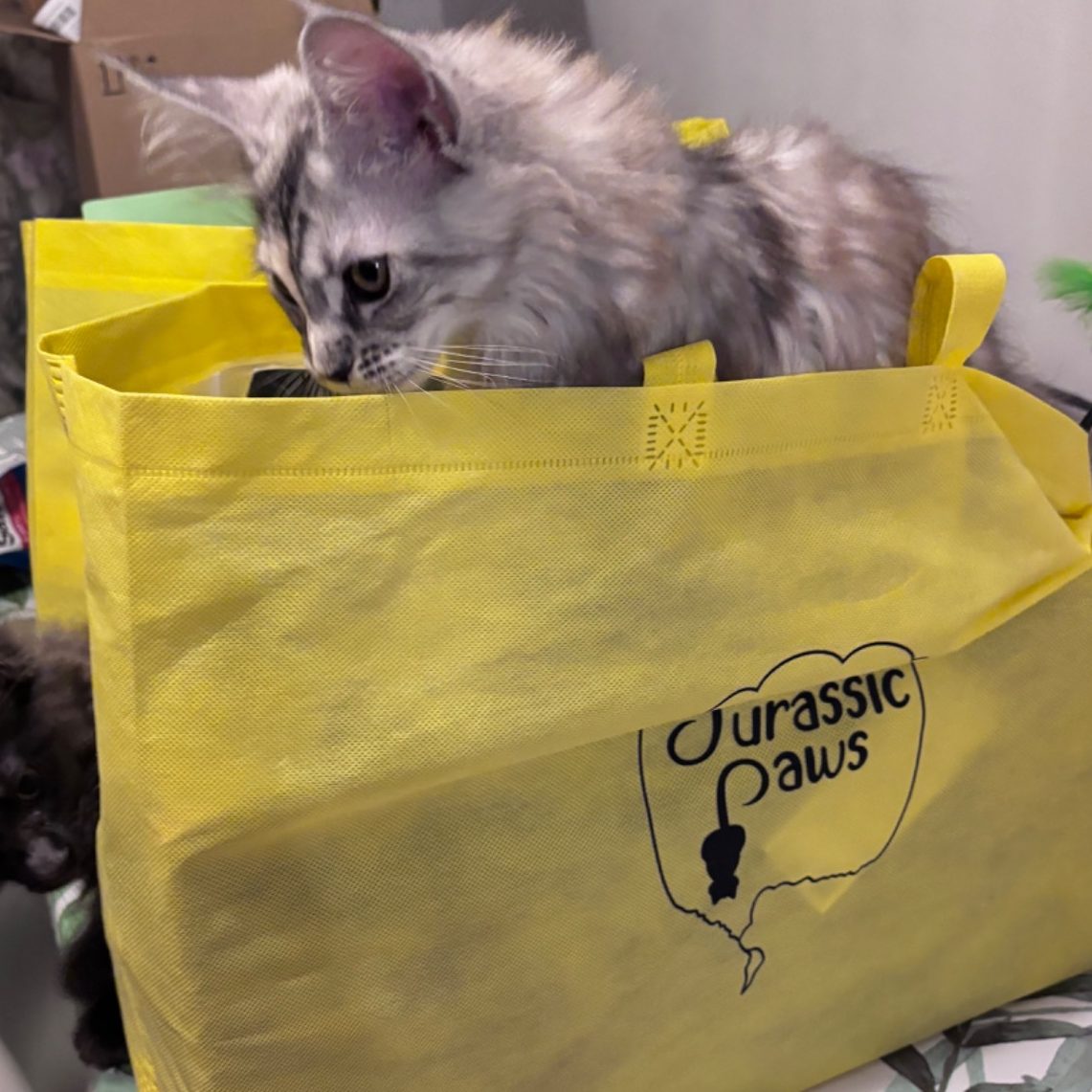
So you've decided to bring a Jurassic Paws Kitten into your family!
First of all, CONGRATULATIONS! You're about to experience the absolute joy of becoming a Maine Coon slave.
Our kittens are usually reserved from 9 - 12 weeks old. From this time, you will receive weekly updates on their progress, usually via whatsapp.
Viewings are welcome, but there are strict hygiene protocols that must be followed to ensure the safety of our kittens. At these viewings, prospective buyers are welcome to look through the parents DNA test results. These are also available to see during video viewings. We do not send out the actual results until deposit is paid as this ensures that our results are not forged and used by backyard breeders!
Once a deposit is put down, we send over proof of parents DNA testing, as well as parents pedigrees, so you know you are buying a properly pedigreed Maine Coon kitten and have access to their lineage.
You will also receive a draft copy of our contract so that you have all the information you need ahead of time. Our contract has been carefully written to protect both parties, but more importantly, to protect our kittens.
Contract includes
* Breeder guarantee that the kitten is pedigreed and that the parents listed on the contract are correct.
* Breeder Guarantee that kittens leave our home healthy and have had all necessary health checks, as well as deworming and flea treatment prior to leaving
* Lifetime telephone support for your kitten.
* Buyers agreement that kittens will be neutered if not done prior to collection
* Buyers agreement that kittens will not be declawed or maimed in any way, unless medically necessary by a registered Vet.
* Buyers agreement that, should they need to re-home the kitten, they will allow the breeder to assist in finding a suitable home.
* Buyers agreement that kittens will continue to be suitably insured once the free insurance expires.
Collection will be arranged and will be here before you know it!!
COLLECTION DAY!!!!
Kittens will be ready to leave and all packed up prior to your arrival.
Theres a little bit of paperwork
Contract signing
Payment
Microchip Transfer
Transfer of Ownership on TICA
4 weeks free insurance through Pet Plan will be set up prior to collection.
Each kitten will leave with a Goodie Bag
Including
A week's wet and dry food, to allow new Owners time to transition to their preferred food.
A scratching board
Kitten Toys
Waggle Wand
Cat Tunnel
A blanket with mum's scent
A folder with their paperwork
And a handmade Dinosaur toy to remind them that they're Jurassic!
Collection can take anywhere from 30 minutes to an hour and we are happy to spend as much time as new owners need to answer questions etc before they leave.
Our Kittens' Journeys
The Birthing Process
Our kittens are ready to leave at around 16 weeks old - but those first 16 weeks are crucial to their development.
So what happens in those 16 weeks?
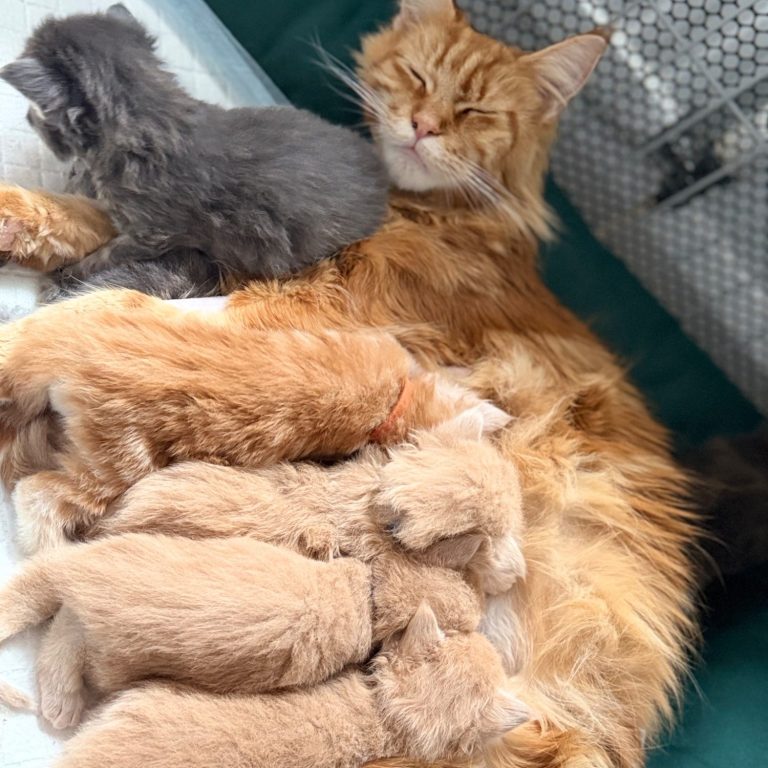
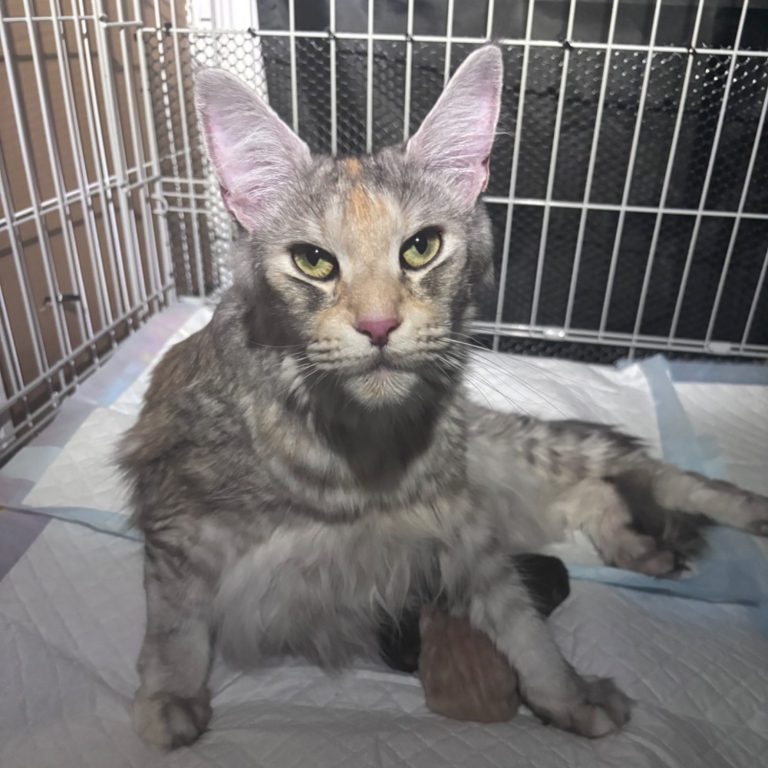
Well... it starts with the miracle of birth. Our Queens are usually ready to give birth around 65 -70 days after conception.
The days leading up to birth are very busy here at Jurassic Paws! Making sure mum is comfortable, well fed and happy are our priorities. Usually, I find that our pregnant Queens become super affectionate in the days leading up to labour, needy almost - and I like to make sure that they feel comfortable and secure, so if that means I spend all day with a heavy lump of fur on my lap, wanting cuddles, then that's what we do!
There's also the birth prep to be done. Ensuring that the nursery is set up, sterilised, comfortable and to the Queens liking is really important. All our Queens are different... Aurora doesnt like to be closed in but she also doesnt like to be exposed so a covered but open door pen works best for her. Lizzie needs quiet, dark and safe - so that's how the nursery is set up for her.
Emergency supplies such as heat pads, syringes for feeding if needed, surgical scissors and lots and lots of fresh bedding and cleaning supplies are kept on hand for the big day.
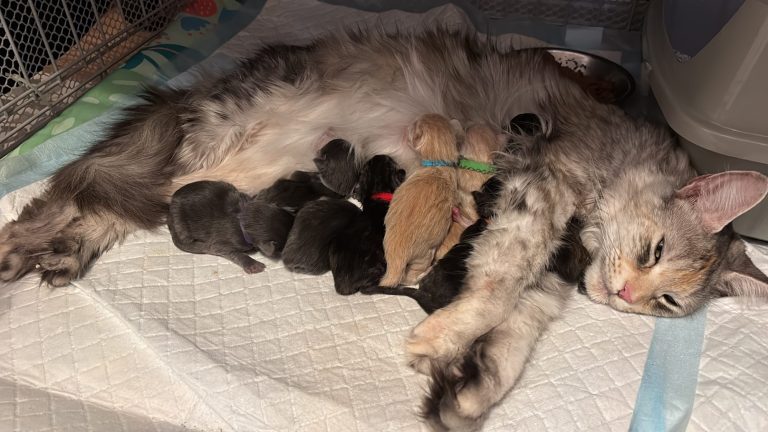
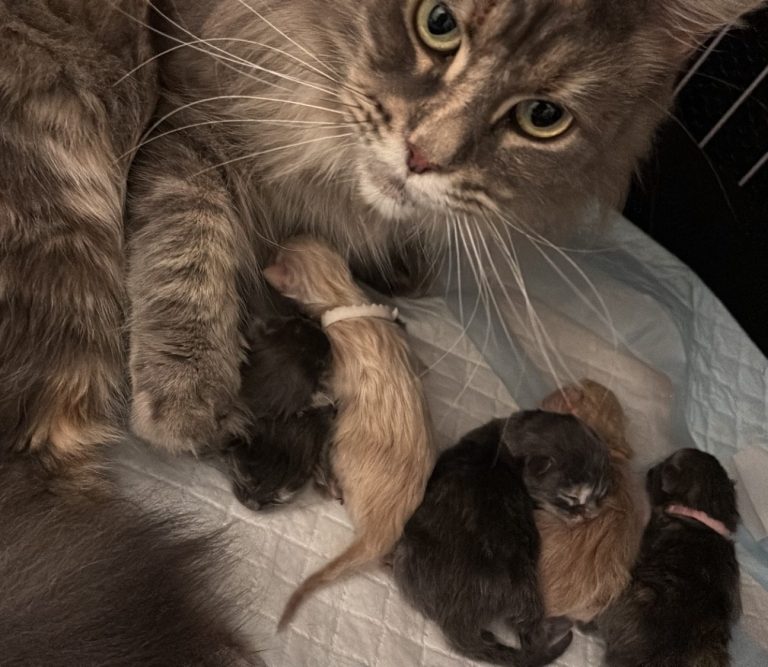
Our mums are brilliant! Labour starts slowly but, once the first kitten arrives, its usually one more every hour or so until they're done. I dont leave them during this time. I also don't interfere unless I need to. These girls know what they are doing, nature kicks in and they constantly amaze me at how incredibly strong they are. My job is just to reassure them, make sure they have food if they need it, give them encouragement and calm support, tell them how beautiful their babies are, tell them that they're good girls and that I'm proud of them.
It might sound silly but my girls seem to want that from me. Pickle held my hand almost the entire way through her first delivery. I love this bond with my girls, it feels very natural and special and I always feel honoured that they trust me enough to be with them while they are delivering.
First Weeks
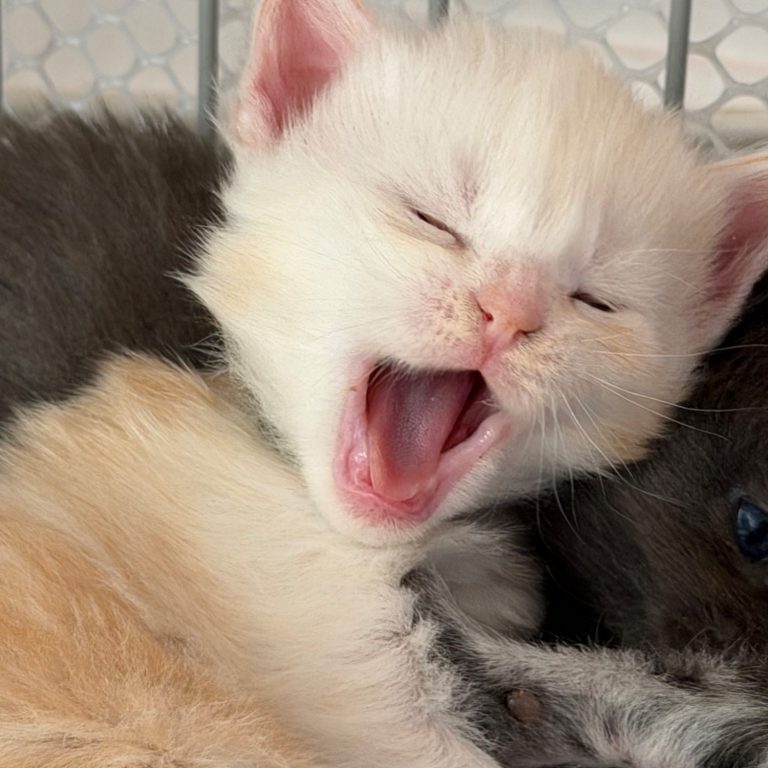
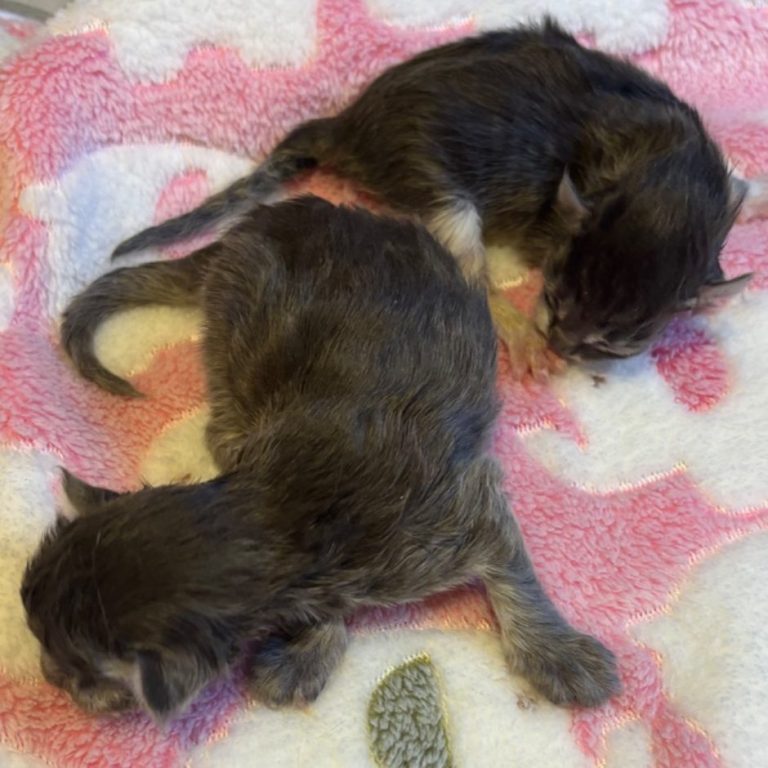
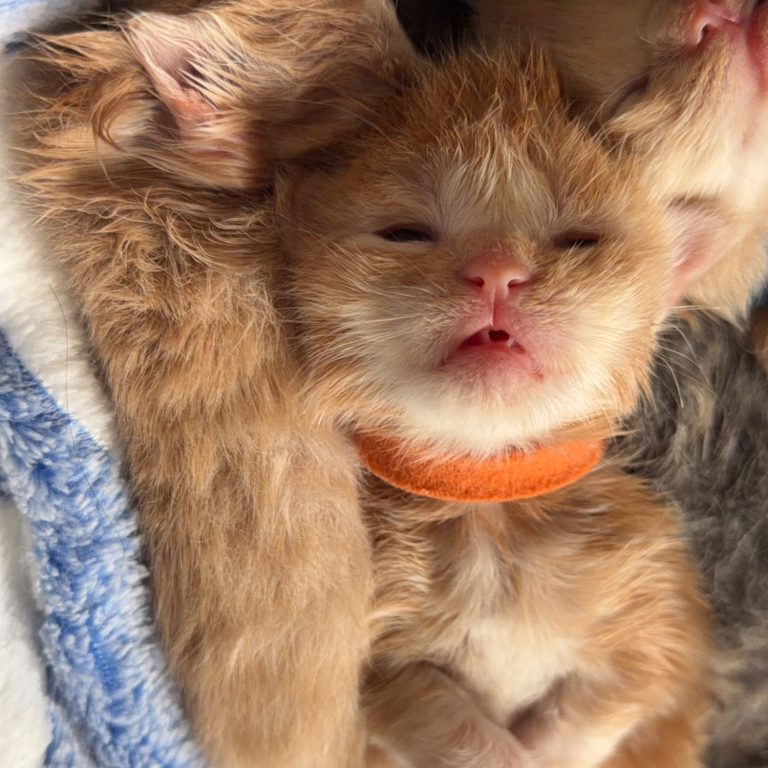
The first few weeks of a kittens life are equal parts calm and terrifying!
For the most part, mum is doing all the work at this stage so breeders can just sit back right?
Not a chance!!!
The first few days are crucial to ensure that all kittens are accessing the colostrum produced by mum before the milk comes in. This colostrum provides vital immunity and nutrients to the kittens and, with larger litters particularly, isn't always fairly distributed. So we step in when we need to. We carefully document colour and weight and we continue to weigh them twice a day, checking for any consistent drops in weight, drop in body temperature, any signs that something isn't quite right and we act when we need to.
Their whelping area needs to be kept very clean and at a constant temperature - around 23 degrees.
Mum is given a high protein, high calorie diet and is free fed, meaning if she's hungry, she gets more food! She is eating for many after all... Really, in these first weeks, our main focus is mum. Making sure she's clean, well fed, has access to water and a litter tray, while ensuring she doesn't move her babies in to the litter tray - yes, I have had this! Most of all, making sure mum feels safe and loved, not overwhelmed or anxious. If she needs a few minutes on her own, we keep watch over babies for her. if she needs reassurance as babies are learning to latch, we give her calm cuddles and gentle words of encouragement. Each Queen is different and its my job to either know what they need or figure it out pretty quickly.
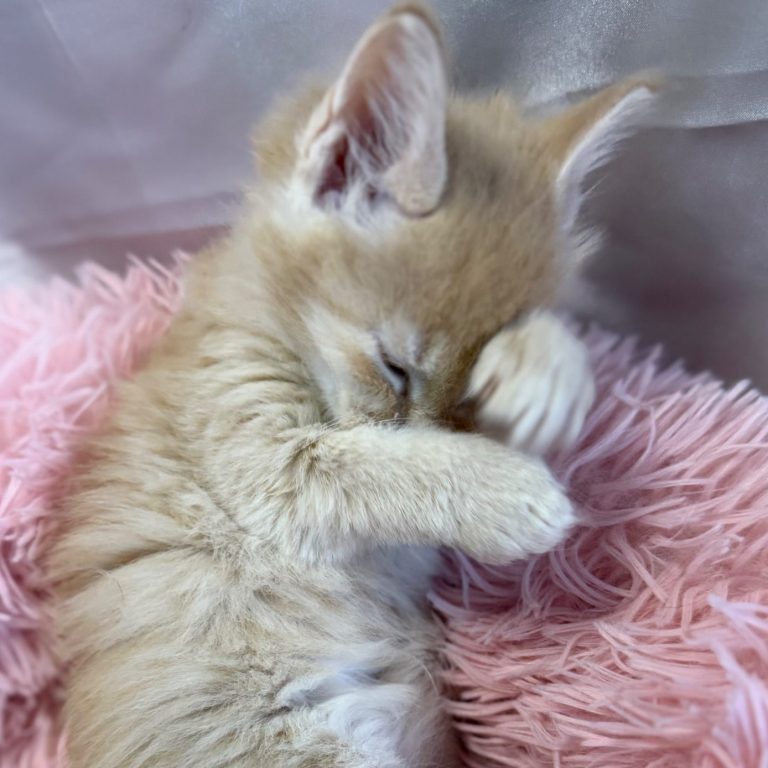
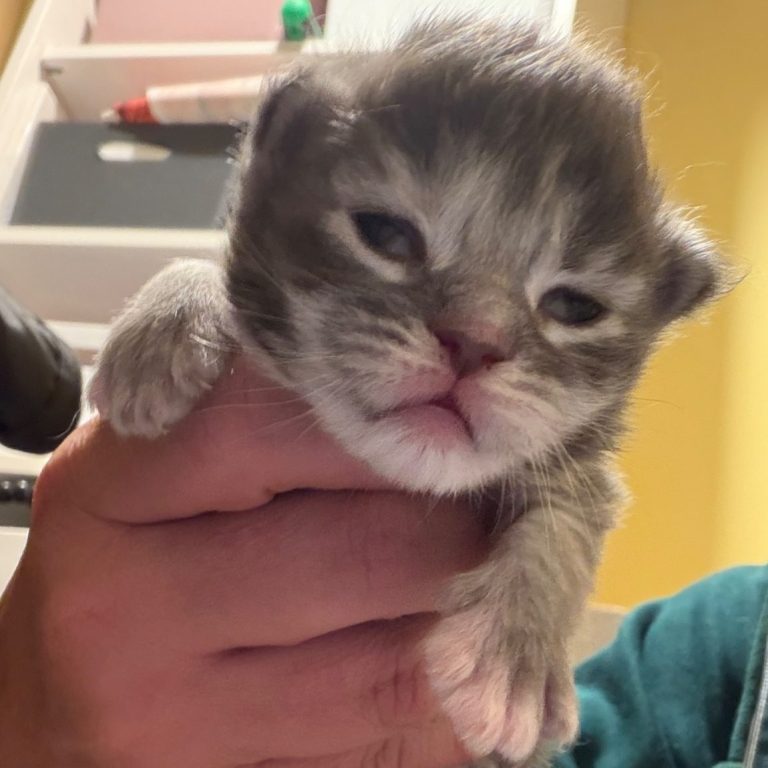
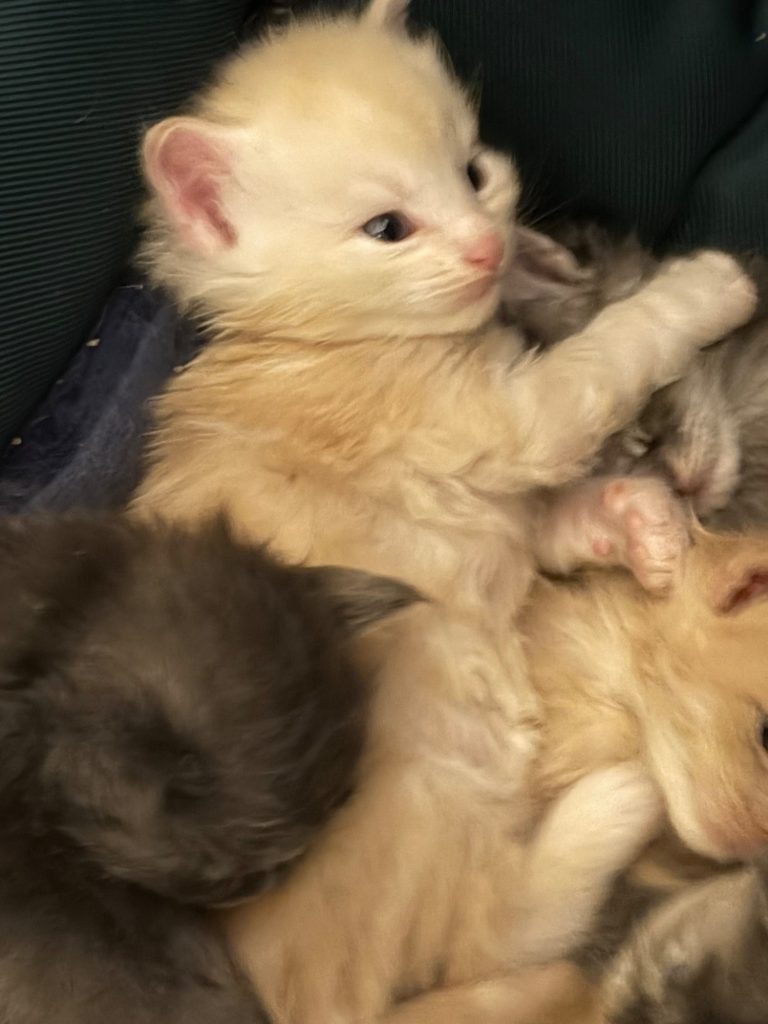
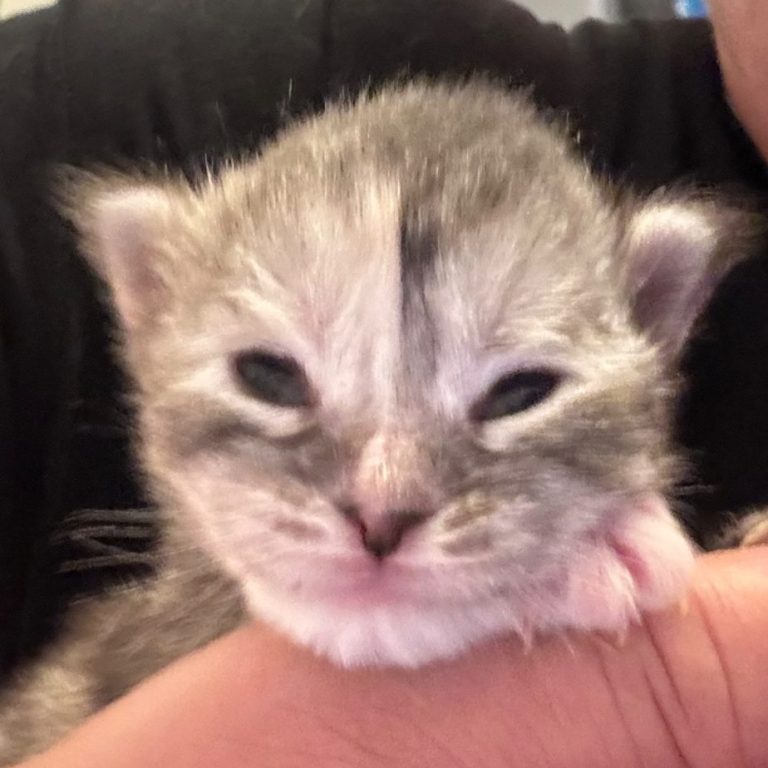
At around 10 days old, kittens start to open their eyes and soon after, they start to try to walk. From around 2 weeks, they start to look like actual kittens, rather than something prehistoric and this is when they start to really come alive.
By three weeks, they're starting to play. It's clumsy, but it's beautiful to watch. They're also discovering the joys of the litter tray! I will never understand a kitten's desire to eat cat litter but it happens, so we watch carefully, use non clumping kitten litter and encourage them to use the litter for its intended purpose!
At around 5 weeks, theyre ready to start trying out solid food. We choose to give them Royal Canin Mother and Babycat Mousse mixed with Royal Canin Mother and Babycat Milk to start their weaning journey. We don't force wean them. Each kitten takes to weaning in their own way. Some are super keen, others really aren't ready till a bit later on and that's fine. Patience, offering food many times a day and letting them figure it out is key.
Once they're on solids, things progress rapidly. They're alert, playful and really ready to learn social skills. They're played with, or should I say we sit down on the nursery floor so that we can be played on!
They are also ready for a bit of mum free time and mum is definitely ready for a bit of grown up time away from babies.
Over the next weeks, they grow, eat, play, nap on a loop. They are also messy at this stage! Litter trays, food bowls, nursery floors, toys, beds - it all needs constant cleaning. We also move them on to the next stage of food, sometimes raw weaning paste, sometimes a pate like Animonda Carny Kitten - it's really down to what they respond to and like. Each litter is different. Some will devour raw food, others won't touch it! So we let them guide us and feed accordingly.
At 8 weeks, they have their first big day out - to the vet for their first vaccinations and health checks! We're very lucky to have an incredible Vet Practice that we work with (shout out to Dorset Coast Vets in Weymouth!!) and they give the kittens a thorough check over (we think that's actually vet code for extended play time with kittens) and then they get their first vaccinations, including the FelV jab, which protects against Feline Leukemia and isn't given as standard by all vets.
Is a vet health check really all that?
To a breeder, maybe no - we tend to have checked most of what a vet would check - but we are not qualified really and a second pair of well trained eyes is always a good thing
Our vet does an extensive health check - nose to tail. Starting with eyes and ears, checking the mouth for cleft palate or signs of teething or gum issues, Eyes and nose are checked for leaks (you know what I mean) and then we move on to heart (murmurs), respitory health, spine, legs, adbomen, femoral pulse, tails, bottoms, confirming sex (because I like to be double sure). Kittens are also observed for their responses and weighed to ensure they are in line with age appropriate weights.
Then home to nap because it's been a big day!
For the next three weeks, they are eating and pooping machines. This is when we start to introduce them to the wider household (once their vaccines have had time to take effect).
From here on out, its madness. Dogs, cats, kittens - abolutely zero chance of using the toilet alone...
Kittens are exploring the house, the catio, choosing their favourite nap time spot, watching evening telly with the family, "helping" cook dinner...
This is the best time! They're growing and learning so quickly at this stage. Their personalities are really coming out too and they become little individuals to us, each with their own distinct nature, likes and dislikes, little quirks and eccentricities. Whether it's Chester's unapologetic need to be in the midde of everything or Willa's insatiable desire to remove personal space from any conversation - we remember them all, no matter how long its been since we sent them off to their new homes!
The final stage is ESN - Early Spay/Neuter. There is a lot of misinformation floating about around the safety of ESN in young cats but mostly this is confusiont between what is best for dogs and what is best for cats. Current research shows that a cats growth is not negatively impacted by ESN. In fact, some studies have found that cats grow longer as a result of ESN. I mean longer, as in length, not length of time!
Part of breeding ethically is making sure that our babies go on to live happy lives as family pets. ESN ensures that we are not unwittingly supporting backyard breeding and it also means that we deal with the post operative care and recovery so that our new owners don't need to worry about any of that.
Why our kittens are neutered before they leave
At Jurassic Paws, our kittens are usually spayed or castrated at around 12 weeks old, once they have reached our vet’s agreed minimum weight—typically around 2 kg—and the vet considers them fit for surgery. The decision is made with our veterinary team, based on the individual kitten.
We do this so that pet kittens are neutered before they go to their new homes. Cats can become reproductively active from around four to five months of age Although Maine Coons tend to start slightly later), sometimes without obvious signs. Neutering before that point helps prevent an accidental litter and means the new owner doesn’t have to arrange the operation later.
Our kittens stay with us until they are ready to leave at around 16 weeks, so they have time to recover in familiar surroundings. We can monitor them after surgery and talk their new families through their care.
What does the research say?
Studies comparing kittens neutered before puberty with those neutered at a more traditional age have not found worse physical or behavioural development in the early-neutered groups. In a study of 800 shelter kittens, researchers found no significant difference in selected health problems through 24 months between kittens neutered at 8–12 weeks and those neutered at 6–8 months.
Neutering before puberty also avoids waiting until sexually mature behaviours may begin. One long-term study found lower rates of urine spraying and sexual behaviours in males neutered before 5.5 months, although neutering cannot guarantee that an individual cat will never spray or show other behaviours.
Spaying before six months has also been associated with a lower risk of mammary carcinoma compared with leaving a female cat entire. That finding supports spaying before the risk window advances.
Every kitten is considered individually
No operation is completely without risk, and early neutering is not automatically suitable for every kitten. Our vet assesses each kitten’s health and readiness, and surgery is carried out using their clinical judgement and appropriate protocols. Occasionally, this my mean we have to delay a kittens going home date but we keep owners informed all the way through the process and work together in the kittens best interests.
Most of the research above has involved shelter or general domestic cats rather than Maine Coons specifically, so breed-specific evidence is limited. We take that into account and work with our veterinary team to make the decision that is right for each kitten.